We’re delighted to see Cakeham House in The Times today (4th December 2025), exploring how our contemporary design achieved planning permission despite initial controversy.
The article highlights how rigorous analysis, sensitive detailing and open dialogue with planners and neighbours helped secure approval for a scheme that balances innovation with context.
Read the article here Cakeham House in The Times.
Here's the transcript.
How to put your stamp on a semi — and win over the planners
Want to extend your half of a semi-detached house? This family dared to be different and got the green light for a timber-clad, Scandi-style vision
Buying a semi used to be an exercise in fitting in. If you wanted to extend, you conformed with the house next door. Now you can dare to be different. When Mark Salvi, a development director, bought a semi in West Sussex in 2021, he was keen to put his own stamp on his half of the red-brick Edwardian property. The result is a bold and astonishing creation: a sleek timber extension that brings Scandi flair to a reserved red-brick house. Like an architectural version of Neapolitan ice cream, or a modern remix of a golden oldie, it certainly turns heads — and suggests that notoriously conservative planners are broadening their minds.
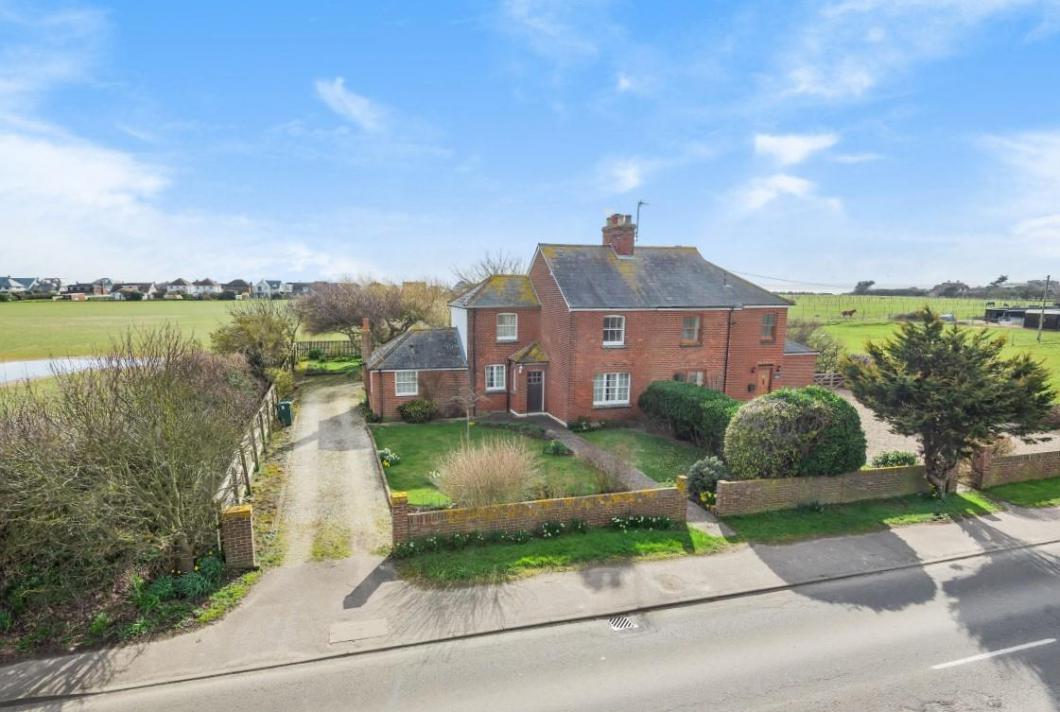
Before and after: the exterior
.jpg)
When Salvi bought it, the three-bedroom house hadn’t been updated in years. It had poor insulation, a rabbit warren of rooms and small windows. It also had a hodgepodge of side and rear extensions. It needed a major overhaul to make it habitable for his family of four, but Salvi, 58, couldn’t resist the location: 300 metres from the beach at West Wittering. At first, he thought of tearing down his half of the semi and starting from scratch with a new detached house on the grounds. His architect, Adam Knibb, advised against it. “I didn’t want to leave the semi looking like it had lost half its body,” Knibb says. “And we would have had to render and insulate the neighbour’s half. We moved on from that idea early on.”
Salvi told Knibb his inspiration: guest cabins at the Newt Hotel in Somerset that have timber cladding all the way to the top of the roofs, concealing “secret guttering” for a smooth look. He was similarly smitten with The Water Shed, a timber-clad house in nearby Bosham that features in the opening credits of Grand Designs.
Knibb was confident he’d get planning permission, as the neighbour’s semi already had extensions that were not of architectural merit. “There is pressure to keep it the same — the planners’ starting point is, let’s not change anything, can you match it?” Knibb says. “But you look a bit deeper and that argument falls apart. It’s about making the point to the planners that the new extension shouldn’t fit in with what was done before: who is to say that other extension was correct? It’s nice to give your semi its own identity. There are too many examples of semis that are stifled by their neighbouring half.”
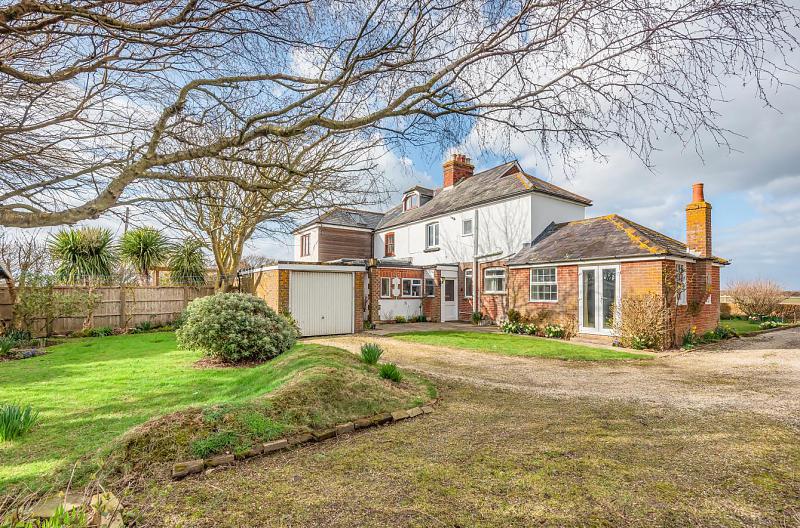
Before and after: the rear
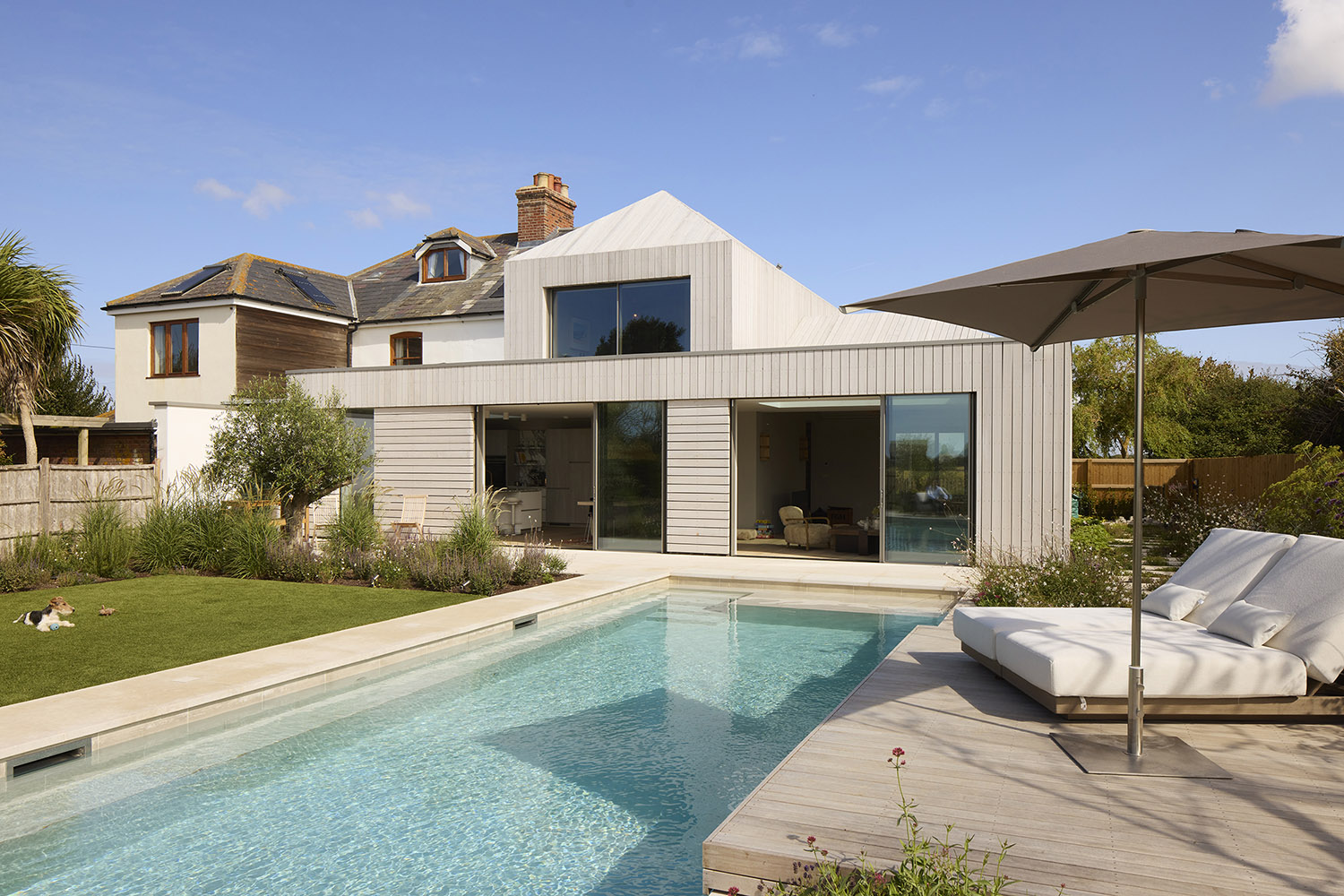
Getting the neighbours on side
Keeping the neighbours onside is a delicate dance. Salvi showed the initial plans to the two couples who jointly own the neighbouring property. They expressed concern that the timber cladding wasn’t in keeping with the brick. He reassured them he was using high-quality timber — Siberian larch — and a top architect. The neighbours also let their property on Airbnb and were worried that noise from construction would disturb guests. To assuage their concerns, Salvi asked for their guest schedule and adapted building plans accordingly, avoiding party wall work and other noisy jobs when guests stayed, and downing tools on Saturdays. He also paid to repoint the joint chimney.
When he applied for planning, the neighbours didn’t object. The planners, however, refused permission. They had no problem with the cladding, but the initial design was deemed too big: too high and wide, upsetting the semi’s symmetry. So Knibb scaled it back and lowered the ridge height.
Permission was then granted. Asking for bigger than you really want is a common tactic with planners, Knibb says. “The planning process is sort of a game of chess. The planners always want to reduce you in scale and height and mass, so you know that’s coming. So perhaps you go into something with a bit more fat on the scheme, so if you have to concede, then you scale it back to where you want it.”
Salvi and Knibb kept the original 1910 semi, but ripped down the later side and back extensions, and demolished the poky rooms and steep staircase. They replaced it with a light and airy L-shaped open-plan living room/kitchen with two 4m skylights, as well as a guest bedroom suite on the ground floor. Sliding glass doors by Skyglaze lead out onto a patio and swimming pool. They put in new electrics, plumbing and insulation and only narrowly missed out on the best EPC A rating, probably because the original cottage has a single-brick skin.
They have two air source heat pumps (one for the swimming pool), which cost about £15,000 each, with a government rebate of £7,500 for one of them. The overall build cost was £412 per sq ft.
A feature open-tread staircase with glass balustrade leads upstairs to the two main bedroom suites. They sacrificed an extra bedroom for a double-height atrium in the entrance hall. “It makes the place feel so much bigger,” Salvi says.
“It plays with your senses,” Knibb says. “The original cottage had low ceilings. Now you walk in and go, wow.”
Planners trump neighbours
Knibb reckons the high ceilings compensate for any potential fall in value from the lost bedroom, and believes the modern design has increased the value of next door too. But Salvi acknowledges that it’s a Marmite project. “People either love it or hate it. We’ve seen people taking photos of it, and some even knocking on the door and asking us about it, which is very flattering.”
You don’t need permission from your neighbour to change your half of the semi (although you do need their cooperation for works on the party wall, under Party Wall Act rules). Under permitted development, you can paint your own half of the semi a different colour, put in different windows, add a driveway, rooflights, satellite dishes and extend a hipped roof into a gable (unless you’re in a conservation area).
And you don’t need the neighbour’s permission for daring architecture: it’s up to the planners. “Neighbours objecting to your design has little impact on whether your project will be approved,” according to Martin Gaine, founder of Just Planning, a consultancy, and author of How to Get Planning Permission. “In practice, the planners are just interested in their own rules of thumb and policies. Even if the next-door neighbour writes in and says, ‘That’s the ugliest thing I’ve ever seen’, it doesn’t matter what they think.”
How to get planning permission
If you want to put your own stamp on a semi, how do you get approval? For double-storey side extensions, the rules of thumb are: it must be less than half the width of the main house, set back 1m from the front, and the roof design should match the main roof, according to Gaine. The ridge height must be lower than the main house. Subservience to the existing house, and symmetry with the neighbouring semi, are key.
It’s easier to get permission if the other semi has already extended. Replacing a poor-quality extension on your side also works in your favour. “If you’re knocking down existing, ugly stuff, you’re providing a benefit,” Gaine says. You can get a bigger extension by extending backwards, as that doesn’t disturb the symmetry of the façade. Planners will often let you increase a semi’s floorplan by about 50 per cent, Gaine says. In theory permission is more likely if you match the brick, windows and roof with next door. “Planners like it if the new extension doesn’t draw the eye or doesn’t stand out. They like something modest that blends in."
So how did this striking project get permission? It helps that next door had already extended. A growing number of planners shun period pastiche and encourage contemporary extensions that contrast with the old house. Although this project is daringly different from next door, Gaine says it does “somewhat” match the scale and form of the neighbour’s extension.
“The application could easily have been refused,” Gaine says. “Their secret is the exceptional high quality of architectural design. It’s beautiful. All of the planning rules kind of go out the window if you’ve got a very good architect who makes it work.”
Knibb argues that the new design is more cohesive than the house’s previous mishmash of extensions. His practice increasingly receives requests for renovations of semis with an individual flair. “Those are the way the inquiries are going at the moment. Maybe people don’t want to buy as big a house, or they want to put their stamp on a smaller house. Whether it’s an affordability thing, I don’t know. But there’s definitely more of a movement to repurpose semis that have been perhaps overlooked in the past. People used to want a detached house for individuality; now you can get that in a semi as well.”